

Autonomous mobile robots
AMR fleets sized to load units, route demand and buffer occupancy—not isolated meters-per-minute claims without exception recovery.
AMRSLAMFleet
Review catalog →
Map receiving, storage, picking and shipping against load units, SKU mix, peak windows and WMS/WCS/PLC ownership. GreyOrange keeps AMR and AGV evaluation attached to the material-flow path your distribution center actually runs—so fleet options are compared with the same testable gates.
Product conversations stay attached to payload envelopes, SLAM navigation limits, fleet-management ownership and the control layer that must own each handshake.
AMR fleets sized to load units, route demand and buffer occupancy—not isolated meters-per-minute claims without exception recovery.
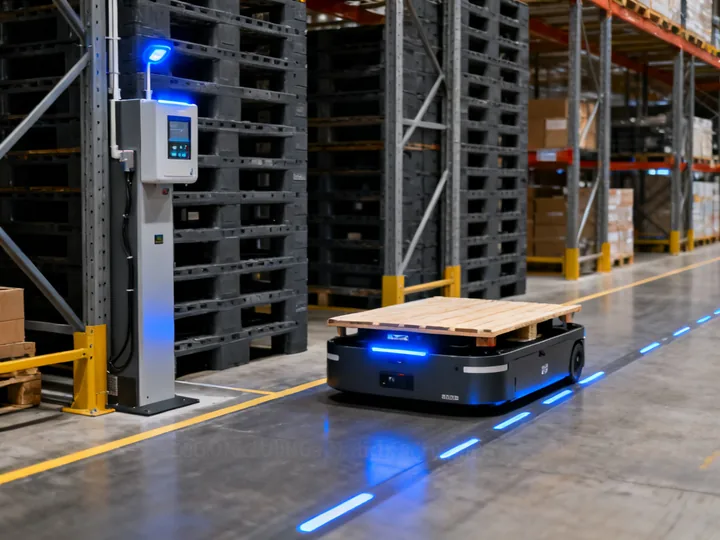
Guided missions, charging windows and traffic priority stay paired with the lane’s peak window and host acknowledgement rules.
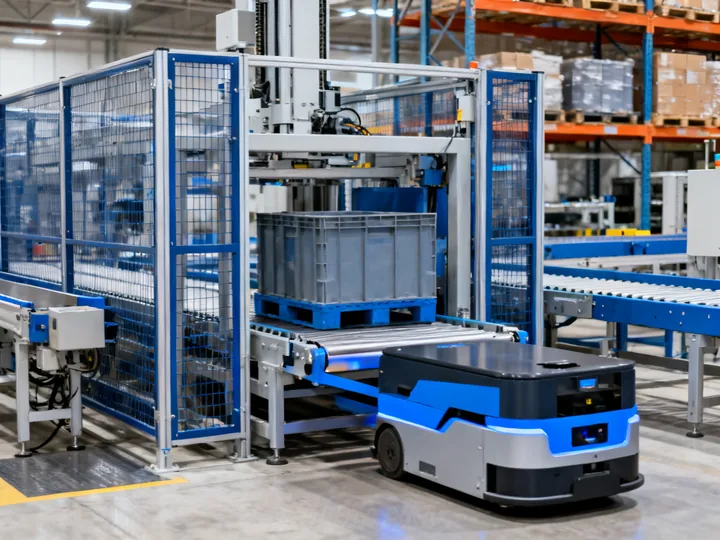
Pick, put and conveyor transfers reviewed against divert confirmation, station availability and WCS timeout ownership.
These fields are screening inputs for GreyOrange warehouse robotics programs. Values are project-specific; they are not catalogue performance claims.
Industry labels are a starting point. Order structure, aisle sharing, temperature bands and recovery windows determine the actual fleet boundary for GreyOrange evaluations.
Campaign cutoffs, tote recirculation and dense associate zones make buffer occupancy and missort recovery central to the GreyOrange review.
Departure windows and chilled zones compress dwell time; fleet routes must respect door cycles and safe isolation access.
Kit integrity, tugger coexistence and production stop risk require clear intersection priority and restart ownership.
Share load units, peak windows, interface owners and site constraints. We respond with a structured evaluation path—throughput validation, controls matrix and acceptance gates included.